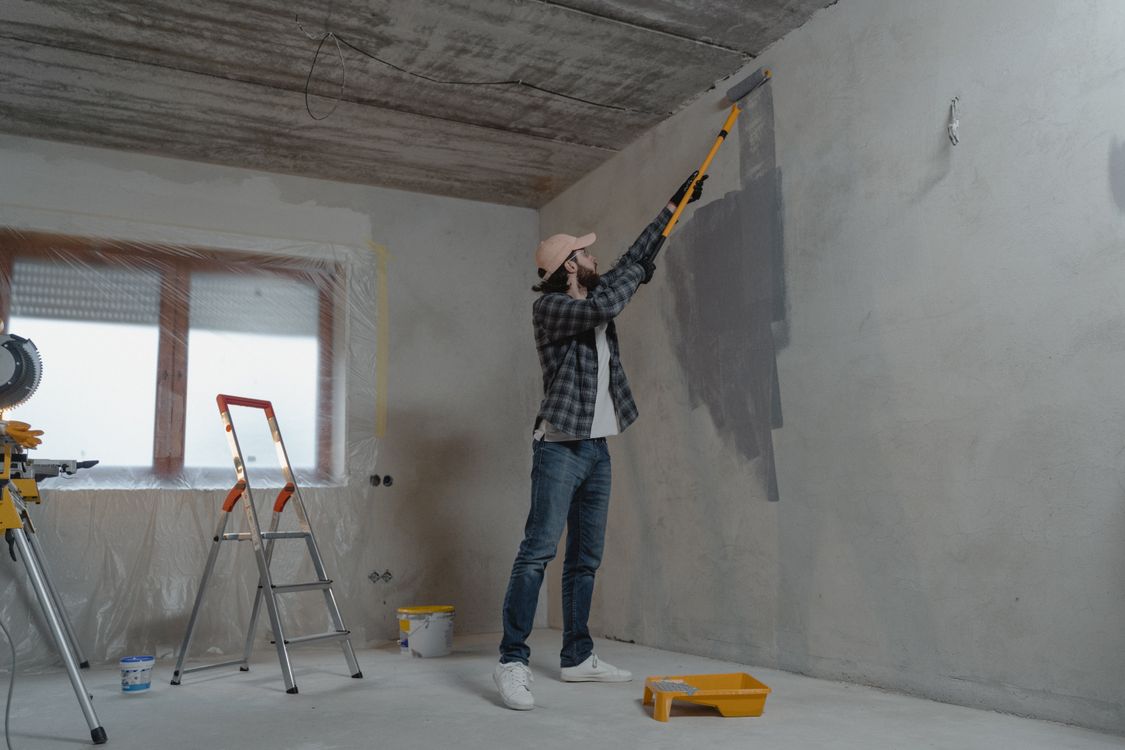
Interior painting looks simple from the outside — walls, paint, done — which is why quotes for the same job can differ so much that homeowners wonder whether someone is guessing. Nobody is guessing. Interior painting is priced on size, condition, prep work, paint quality and detail, and each of those moves the number in a predictable way. Once you know what goes into a quote, you can compare painters fairly and spot the quote that leaves something important out.
How painters usually price a job
Most professional painters quote interior work in one of two ways: a flat price for the job, or a price per square foot of paintable surface. Flat pricing is the most common for whole rooms and whole houses, because it is easy to compare — one number for the finished job. Per-square-foot pricing is common for larger jobs and is usually quoted on wall area, not floor area, which is why a painter measures your walls rather than trusting the floor plan. Some painters price per room as a shorthand, but a small bedroom and a large living room with a vaulted ceiling are very different rooms, so per-room numbers only make sense when the rooms are described. Whatever the method, a serious quote should be in writing and should say what is included: prep, coats, paint, trim and cleanup.
Typical ranges, room by room
These are broad, hedged ranges, not promises — your market, your walls and your paint choice all move the number. A standard bedroom with normal ceilings and walls in reasonable condition typically falls in the middle hundreds for labor plus paint, while a small bathroom or hallway is often less. A large living room or open-plan space with tall walls typically lands in the low four figures, and a whole-house interior — several bedrooms, living areas, hallways and trim — is a multi-thousand-dollar job that varies widely with the size of the home and the amount of detail work. Trim, doors and ceilings are often priced separately or as add-ons: painting ceilings, baseboards, window trim and interior doors takes careful cutting-in and adds real time, so a quote that includes all trim will be noticeably higher than one for walls only. Always check which of these your quote covers before comparing totals.
What moves the price most
- Wall condition and prep. This is the biggest hidden cost driver. Filling nail holes, patching dents, repairing drywall cracks, sanding rough patches and priming stains all take time, and a room that needs heavy prep costs more than a room in good shape. Skipping prep is how a cheap paint job looks cheap within a year.
- Ceiling height and access. Standard eight-foot ceilings are fast work. Vaulted ceilings, stairwells and two-story walls need ladders or scaffolding and slow, careful cutting-in, and the price reflects that.
- Paint quality. Paint ranges from budget contractor grades to premium lines that cover better, resist scuffs and wash clean. Premium paint costs more per gallon but often covers in fewer coats, so the most expensive paint is not always the most expensive job — ask what product is in the quote.
- Number of coats and color changes. Two coats is standard for a quality job. A dramatic color change — dark to light, or light to dark — often needs a primer coat plus two finish coats, which adds a full round of labor.
- Detail work. Crown molding, wainscoting, built-ins, French doors and detailed trim all slow the work and raise the price. So does careful work around hardwood floors, cabinets and fixtures that must be protected.
- Furniture and occupancy. An empty room is fast. A furnished, occupied room means moving, covering and working around everything, and that time is in the quote.
DIY vs hiring a pro
Painting a single bedroom yourself is a very doable weekend project, and the savings are real: you pay for paint and supplies only. But the gap narrows quickly on bigger jobs. Professionals bring speed, clean cutting-in at edges and ceilings, spray equipment for large areas, and the prep skills that make paint last. They also carry the risk: drips on hardwood, paint on fixtures, a ladder fall on a stairwell. A good rule is to DIY a small, simple room you can enjoy doing, and hire out anything with tall ceilings, heavy prep, detailed trim or a deadline. If you do hire, the cheapest quote is rarely the best value — a painter who skips prep and uses thin paint costs less today and costs you a repaint sooner.
How to compare quotes fairly
- Get every quote in writing, with prep, coats, paint brand and line, trim and cleanup all listed.
- Ask how many coats are included, and whether primer is included for color changes or repairs.
- Ask who moves and protects furniture, floors and fixtures — and who moves them back.
- Check that the painter is insured, and ask what happens if paint lands where it should not.
- Compare what is included, not just the total. A quote that leaves out ceilings, trim or prep is not cheaper — it is incomplete.
- Ask about the warranty on the work, and how touch-ups are handled.
Ways to keep the cost down without cutting quality
There are honest ways to lower the bill. Do the easy prep yourself — removing wall plates, moving small furniture, clearing rooms — and let the painter handle the skilled prep. Keep the color change modest where you can, since a similar shade often needs one less coat. Choose a quality mid-range paint rather than the most expensive line, and paint rooms in one project rather than one at a time, since a painter already on site works more efficiently. What not to cut: prep work, primer where it is needed, and the second coat. Those are the difference between a paint job that lasts years and one that shows its age in months.
The bottom line
Interior painting costs follow the room: its size, its condition, its height, its detail and its paint. Get two or three written quotes that spell out prep, coats and paint, compare what is actually included, and choose the painter whose explanation is clearest — that clarity usually shows up in the finished walls. For a written quote on your own rooms, see Reading only gets you so far. Talk to a reviewed local pro, get a written quote, and pay the business directly — this platform never takes advance payments.Need a painting pro?