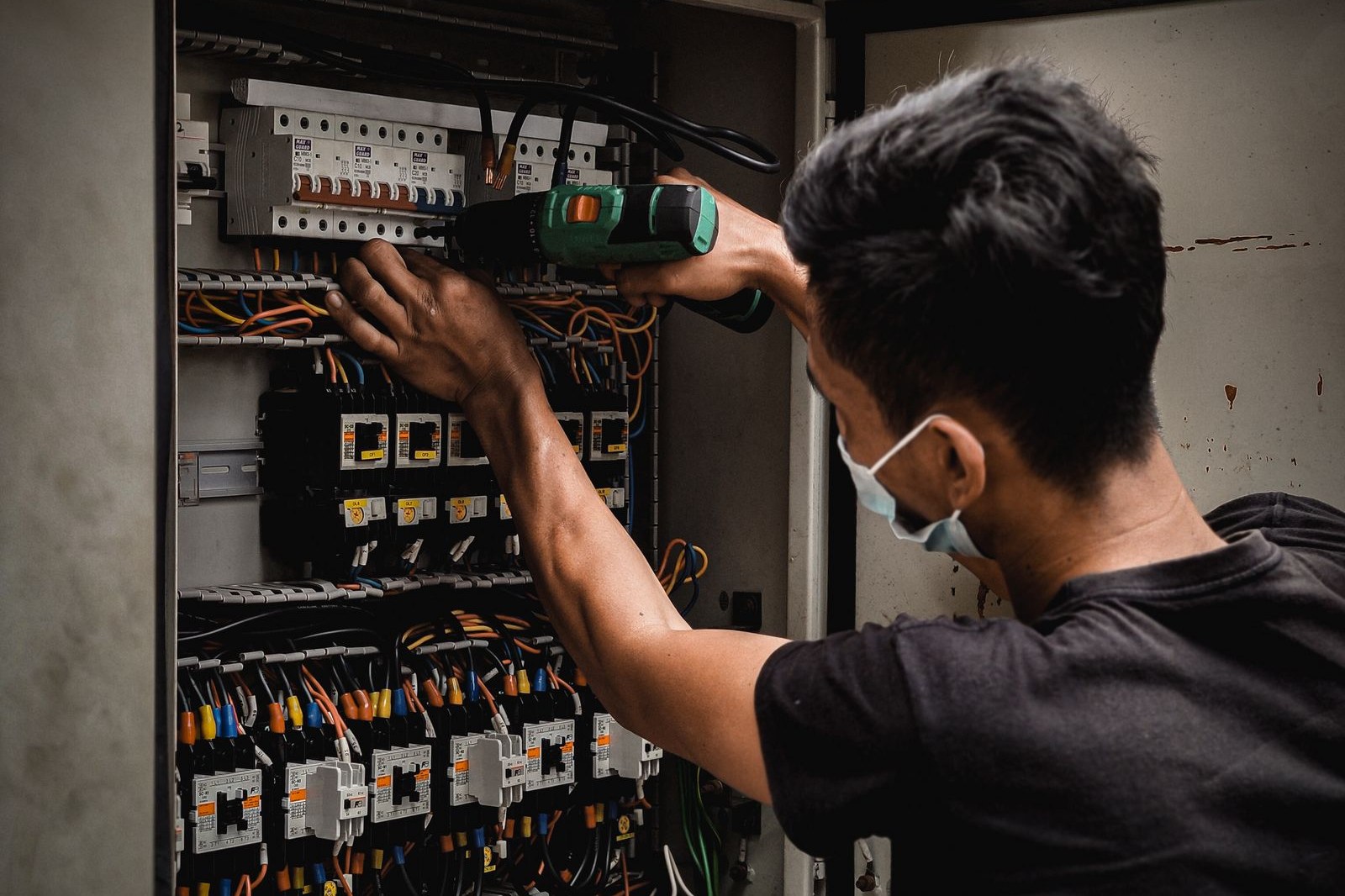
It always happens at the worst moment: the lights go out, the room goes quiet, and you are walking to the panel in the dark. A circuit breaker that trips once in a while is doing what it was built to do — cutting power before a fault becomes a fire. But a breaker that trips again and again is not being dramatic. It is telling you something, and the message is worth understanding before you just flip it back on.
What a breaker actually does
Think of a breaker as a guard on each circuit in your home. Every circuit — the kitchen outlets, the bedroom lights, the air conditioner — is wired to carry a certain amount of current safely. When the current exceeds that limit, or when electricity escapes its intended path, the breaker snaps open and stops the flow. That is the trip. Resetting it restores power, but it does not fix whatever caused the trip. If the cause is still there, it will trip again — and repeated resetting without investigating is how a small problem becomes a dangerous one.
Cause 1: An overloaded circuit
This is the most common cause, and the most forgiving. An overloaded circuit simply has too many things drawing power at once: a space heater and a hair dryer on the same bedroom circuit, or a kitchen where the microwave, toaster and coffee maker all run together. The fix is usually simple — move one appliance to a different circuit, or stop running two heavy loads at the same time. If the tripping stops, you have found your answer. But if the same circuit trips under a normal, everyday load, the problem is deeper than too many appliances.
Cause 2: A short circuit
A short circuit happens when a hot wire touches a neutral wire, letting current surge through a path of almost no resistance. The breaker trips instantly and forcefully — often with a snap you can hear — and it will trip again immediately every time you reset it. Shorts are commonly caused by damaged wiring, a loose connection, or an appliance whose internal wiring has failed. If a breaker trips the instant you reset it, with nothing new plugged in, do not keep trying: something on that circuit is shorting, and it needs a professional to find it.
Cause 3: A ground fault
A ground fault is similar to a short, except the current escapes to ground — through a person, through water, or through a metal appliance casing. This is why kitchens, bathrooms, garages and outdoor outlets use GFCI protection: a GFCI outlet or breaker trips on a tiny leakage current, far smaller than what a standard breaker notices, because even a small shock through a wet hand can be serious. If a GFCI outlet or breaker keeps tripping, especially in a damp area, water may be getting where it should not — a worn outlet seal, a cracked cover, or an appliance with a damaged cord. Dry the area, unplug everything on that circuit, and if the tripping continues, call an electrician rather than bypassing the protection.
Cause 4: The breaker itself is failing
Breakers wear out. A breaker that trips under loads it used to handle easily, feels loose, will not stay reset, or is warm to the touch may simply be at the end of its life. Age, heat and repeated tripping all wear the internal mechanism. A failing breaker is a real possibility in older panels, and it is also the cheapest explanation — but it is not one to assume. A new breaker on a circuit with a genuine fault will just trip again, and swapping breakers without testing is guesswork. A good electrician tests the circuit first and replaces the breaker only when the circuit itself checks out.
Safe checks you can do yourself
- Unplug everything on the tripping circuit, reset the breaker once, then plug things back in one at a time. The item that trips it is your prime suspect.
- Look for the pattern: does it trip when one particular appliance runs, or when two specific things run together? Patterns diagnose faster than anything else.
- Check for obvious damage: a frayed cord, a scorched outlet, a plug that sparks when inserted. Retire damaged cords immediately — do not tape them and carry on.
- Reset a breaker firmly: push it fully to Off first, then to On. A breaker left halfway is not properly reset.
- Never tape a breaker in the On position, never replace it with a higher-rated one, and never bypass GFCI protection. Each of those removes the safety device that is trying to protect you.
Signs that mean stop and call a pro
Some tripping situations are not DIY territory. Call an electrician the same day if you notice a burning or fishy smell near the panel or an outlet, a breaker or outlet that feels warm, buzzing or humming from the panel, scorch marks or discoloration, or a breaker that trips instantly on reset with nothing plugged in. These are signs of arcing, overheating or a failing panel — the exact conditions breakers exist to interrupt. If you ever see smoke or the panel itself is hot, switch off the main breaker if you can do so safely and call for help.
What the electrician will do
A proper diagnosis starts with testing, not guessing. The electrician will measure the load on the circuit, test for shorts and ground faults, inspect the panel for loose or corroded connections, and check whether the circuit is simply undersized for what it now feeds. The fix might be as small as a replacement breaker or a dedicated circuit for a heavy appliance — or, in an older home whose panel predates modern loads, part of a larger panel conversation. Either way, you should get a written explanation of what was found and a written quote before work begins.
The bottom line
One trip is protection. Repeated trips are a message: overload, short, ground fault or a tired breaker. Work through the safe checks, respect the stop signs, and never defeat the device that is trying to keep you safe. If the pattern points past a simple overload, get a licensed electrician to test the circuit properly — see 5 Electrical Problems You Should Never Ignore.