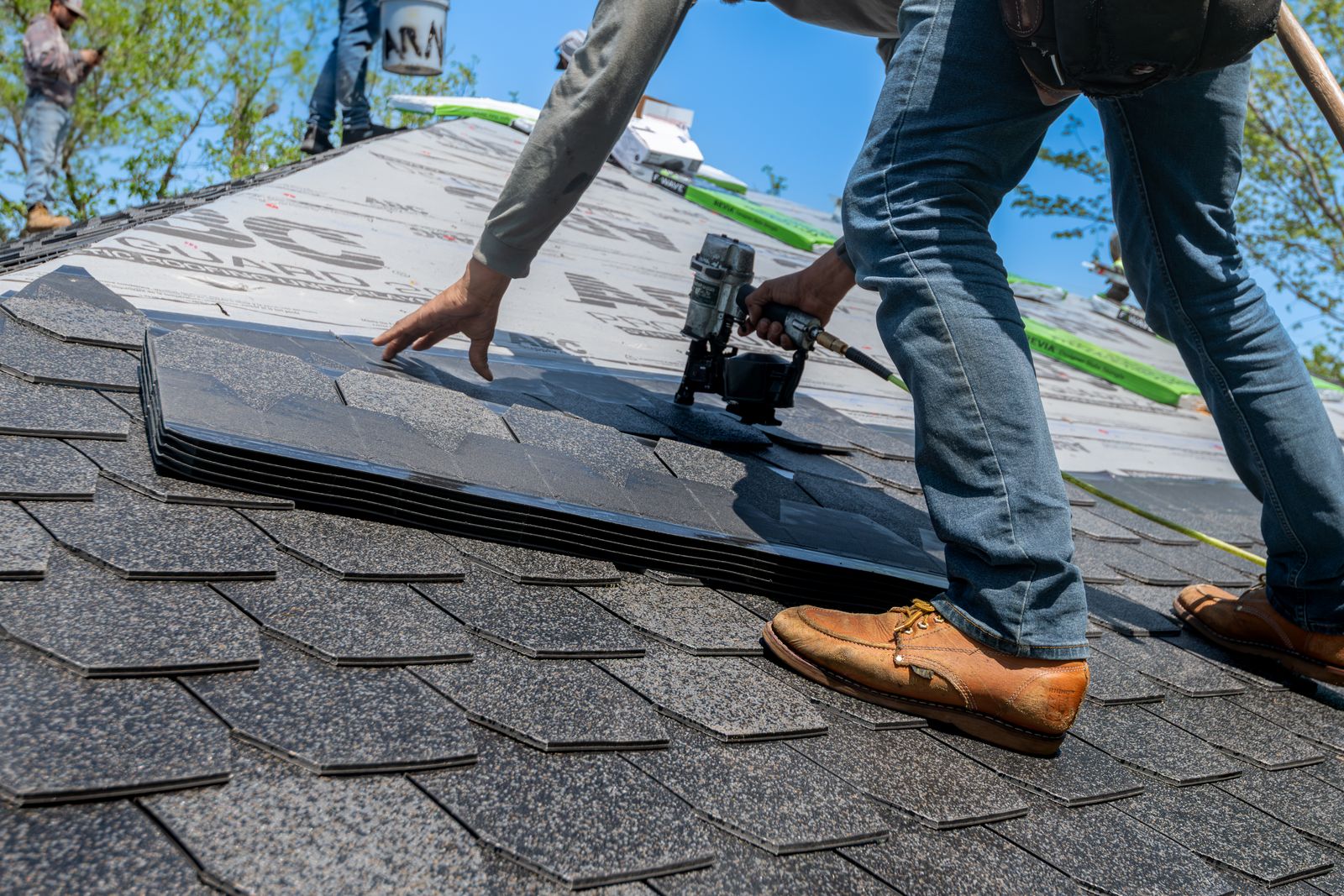
A simple Florida roof repair typically costs a few hundred dollars; a major partial repair — a large section of roofing or widespread decking replacement — is typically a multi-thousand-dollar job, at which point it is worth comparing against full replacement. Everything between follows the work, not the size of the ceiling stain — here is how to tell which job yours is.
What counts as a roof repair
Most roof repairs fall into a few familiar categories. Shingle or tile replacement covers individual pieces that are cracked, curled, missing or blown off. Flashing repair covers the metal strips that seal the joints where a roof meets a wall, a chimney, a vent or a valley — the places leaks most often start. Vent boot and pipe collar replacement covers the rubber seals around plumbing vents, which crack in Florida's sun after years of exposure. Valley and ridge work covers the channels and peaks where water concentrates. And decking repair covers the plywood or boards underneath the roofing material itself, which may be rotted or soft after a leak has gone unnoticed. A quote should say which of these your job is, because the price follows the work, not the size of the ceiling stain.
Typical cost ranges, from small to large
These are broad, hedged ranges for Florida homes, not quotes — your roof type, your market and the extent of hidden damage all move the number. A minor repair — replacing a handful of shingles, resealing a small flashing joint, or swapping a cracked vent boot — typically falls in the low-to-mid hundreds, including labor and materials. A moderate repair — a valley section, a stretch of flashing, several vent boots, or a small area of decking plus new shingles over it — typically lands in the high hundreds to the low thousands. A major partial repair — a large section of roofing, widespread decking replacement, or work around multiple penetrations — is typically a multi-thousand-dollar job, and at that point it is worth comparing against the cost of a full replacement. Emergency work, such as a post-storm tarp, usually adds a premium.
What moves the price most
- Roofing material. Asphalt shingles are the most common and usually the cheapest to repair. Concrete and clay tile, very common in South Florida, cost more per piece and take more care to walk on and replace without breaking neighbors. Metal roofing repairs depend on the panel profile and fastener system, and matching an older profile can take longer than the repair itself.
- Pitch and access. A low, walkable roof is fast work. A steep roof needs safety equipment, slower movement and sometimes staging, and the price reflects that. A two-story roof costs more to work on than a single-story roof for the same repair.
- Hidden damage. This is the biggest source of surprise bills. A leak that has run for months may have rotted decking, soaked insulation or stained ceilings, and none of that is visible until the roofing comes off. A good roofer photographs what they find and explains the extra work before doing it, rather than presenting it afterwards.
- Permits and code. Some Florida jurisdictions require permits for larger repairs, and Florida's building code sets standards for underlayment, fasteners and wind resistance that a proper repair must meet. A quote that ignores code is not cheaper — it is incomplete.
- Timing. After a named storm, demand spikes and reputable roofers book out. Prices do not necessarily rise, but availability falls, and the gap is where storm-chasing outfits appear. Patience after a storm is usually rewarded with a better contractor.
Florida factors worth knowing
Three Florida realities shape repair costs. First, the sun: ultraviolet exposure degrades shingles, sealants and rubber boots faster here than in cooler climates, so a roof that looks fine from the ground may have brittle components up close. Second, wind: Florida's code requires roofing systems rated for high winds, and a repair that mixes incompatible materials or skips proper fastening can fail in the next storm even if it looks tidy. Third, age: many Florida roofs are replaced on a shorter cycle than northern roofs, so a repair on a roof near the end of its life is money spent twice if replacement follows within a year or two.
Repair or replace? The decision that matters most
As a rough guide, repair makes sense when the damage is localized, the roof is well within its expected life, and the decking underneath is sound. Replacement starts to make sense when damage is widespread, leaks keep returning in different spots, the roof is near or past its expected lifespan, or the repair bill approaches a large fraction of replacement cost. If a roofer recommends replacement, ask them to show you the evidence — photographs of the damage, the age of the system, and the math comparing repair against replacement. Our guide New Roof vs Roof Repair: How to Decide walks through this comparison in detail.
How to get a fair quote
- Get two or three written quotes that describe the work, the materials and the warranty — not just a total.
- Ask for photographs of the damage and of the finished repair.
- Confirm the contractor is licensed for roofing work in Florida and carries liability insurance and workers' compensation.
- Ask whether the quote includes permits, disposal of old material, and any decking replacement, or whether those are extras.
- Be cautious about anyone who appears uninvited after a storm, pressures you to sign on the spot, or asks you to sign over insurance rights before any work is described.
- Ask what warranty covers the repair itself — a manufacturer's warranty on materials is not the same as a workmanship warranty on the repair.
The bottom line
A small Florida roof repair typically costs a few hundred dollars, a moderate one runs into the low thousands, and a major partial repair runs higher still — and the single biggest factor is what is found underneath once the work starts. Get the damage photographed, the scope in writing, and the repair-versus-replacement math explained before anyone climbs a ladder. For a written quote on your own roof, see Reading only gets you so far. Talk to a reviewed local pro, get a written quote, and pay the business directly — this platform never takes advance payments.Need a roofing pro?