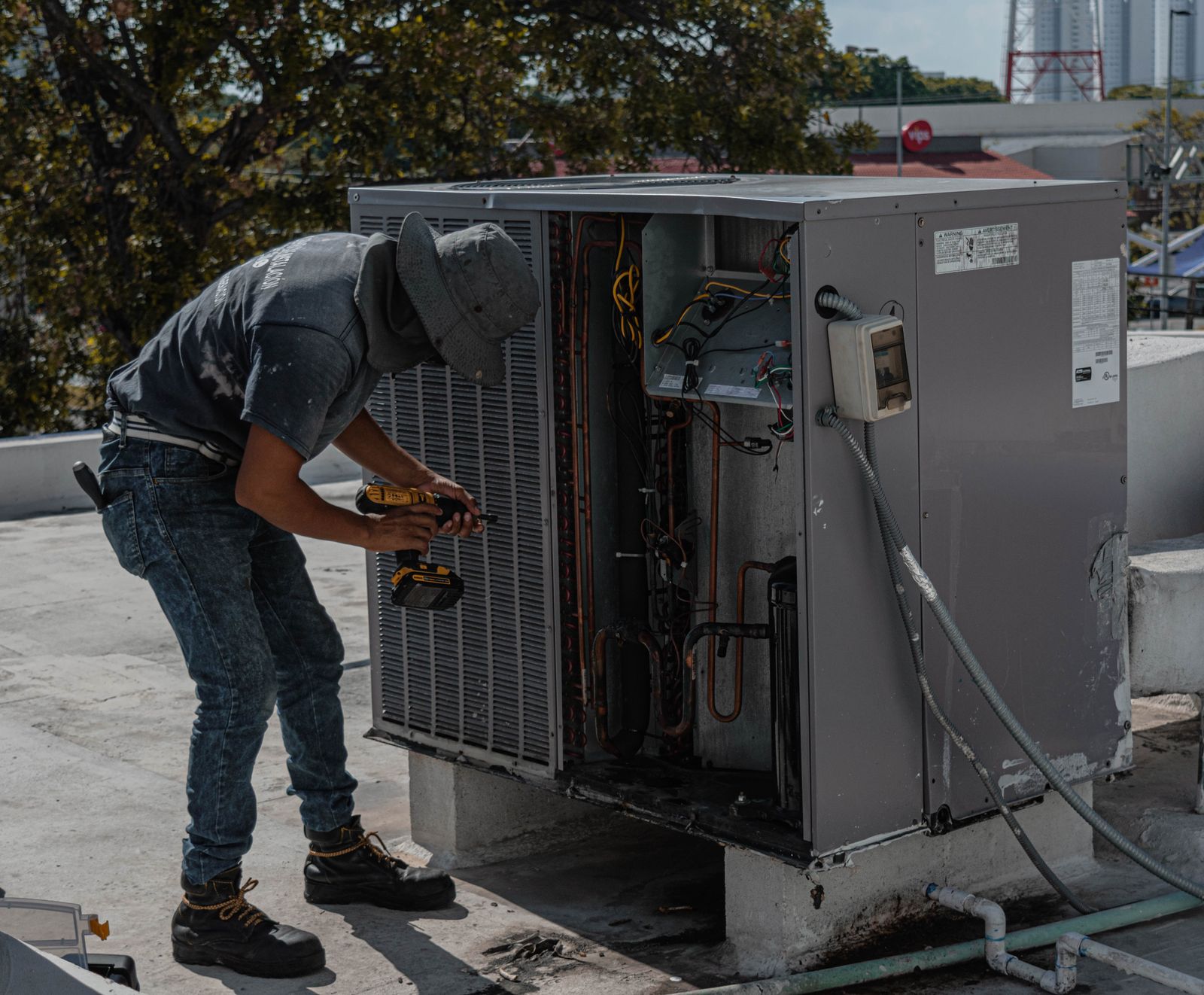
Your heating and cooling system is the hardest-working machine in your home, and the easiest to forget — right up until it quits on the hottest or coldest day of the year. Twice-a-year maintenance, once before cooling season and once before heating season, is how pros keep these systems running efficiently for their full life. Here is what that routine actually involves, split between what you can do yourself and what belongs to a technician.
What you can do yourself
- Change or wash the filter. The single highest-value habit on this list. A clogged filter strangles airflow, makes the system run longer, and can freeze the cooling coil. Check it monthly; most homes need a fresh one every one to three months, more often with pets or allergies.
- Clear the outdoor unit. Keep leaves, grass and stored items at least a couple of feet away from the condenser on all sides, and gently rinse dirt off the fins with a hose — power off first, and never use a pressure washer on the coils.
- Open and unblock the vents. Closed or furniture-blocked registers unbalance the whole system. Walk the house each season and make sure air can actually move.
- Test the thermostat. Switch between heating and cooling before the season starts, not during the first heat wave. Replace the batteries if it has them, and check that the temperature it shows matches a simple thermometer nearby.
- Keep the condensate drain clear. A cup of vinegar down the drain line a couple of times a year helps keep algae from clogging it — and a clogged drain is a common, messy cause of water damage and surprise shutdowns.
What the technician does on a tune-up
- Cleans and inspects the coils. Dirty evaporator and condenser coils are a leading cause of weak cooling and high bills; cleaning them is the heart of a real tune-up.
- Checks refrigerant and looks for leaks. A system that needs topping up every year has a leak — refrigerant is not a consumable, and a good tech will say so.
- Tests electrical connections and safety controls. Loose connections are both an efficiency problem and a fire risk, and wear parts like capacitors and contactors get checked before they fail in July.
- Inspects the blower and moving parts, and lubricates what needs it, so air moves quietly and evenly.
- Checks the heat exchanger and ignition on heating systems. A cracked heat exchanger is a carbon-monoxide risk — exactly why the fall visit matters as much as the spring one.
Why the routine pays for itself
A well-kept system typically lasts around 15 to 20 years; a neglected one often gives up years earlier. Maintenance also keeps efficiency close to what you paid for — a dirty, straining system uses more energy to do the same job, month after month. And there is a scheduling benefit nobody mentions until they need it: the homeowner with a maintenance history gets the early warning — “your compressor is weakening” — while there is still time to plan, instead of an emergency replacement quote during a heat wave.
Signs you are overdue
- Some rooms are always hotter or colder than others.
- The system runs almost constantly, or cycles on and off every few minutes.
- New noises — rattling, buzzing, grinding — or musty smells from the vents.
- Energy bills creeping up even though your usage has not changed.
- You honestly cannot remember the last time anyone looked at it.
The bottom line
Filters and clearance are your job; coils, refrigerant and safety checks belong to a pro, twice a year. It is one of the few home routines that reliably pays for itself — in longer equipment life, steadier comfort and fewer emergency calls. Book the spring visit before the first hot week and the fall one before the first cold snap, and your system will rarely surprise you.