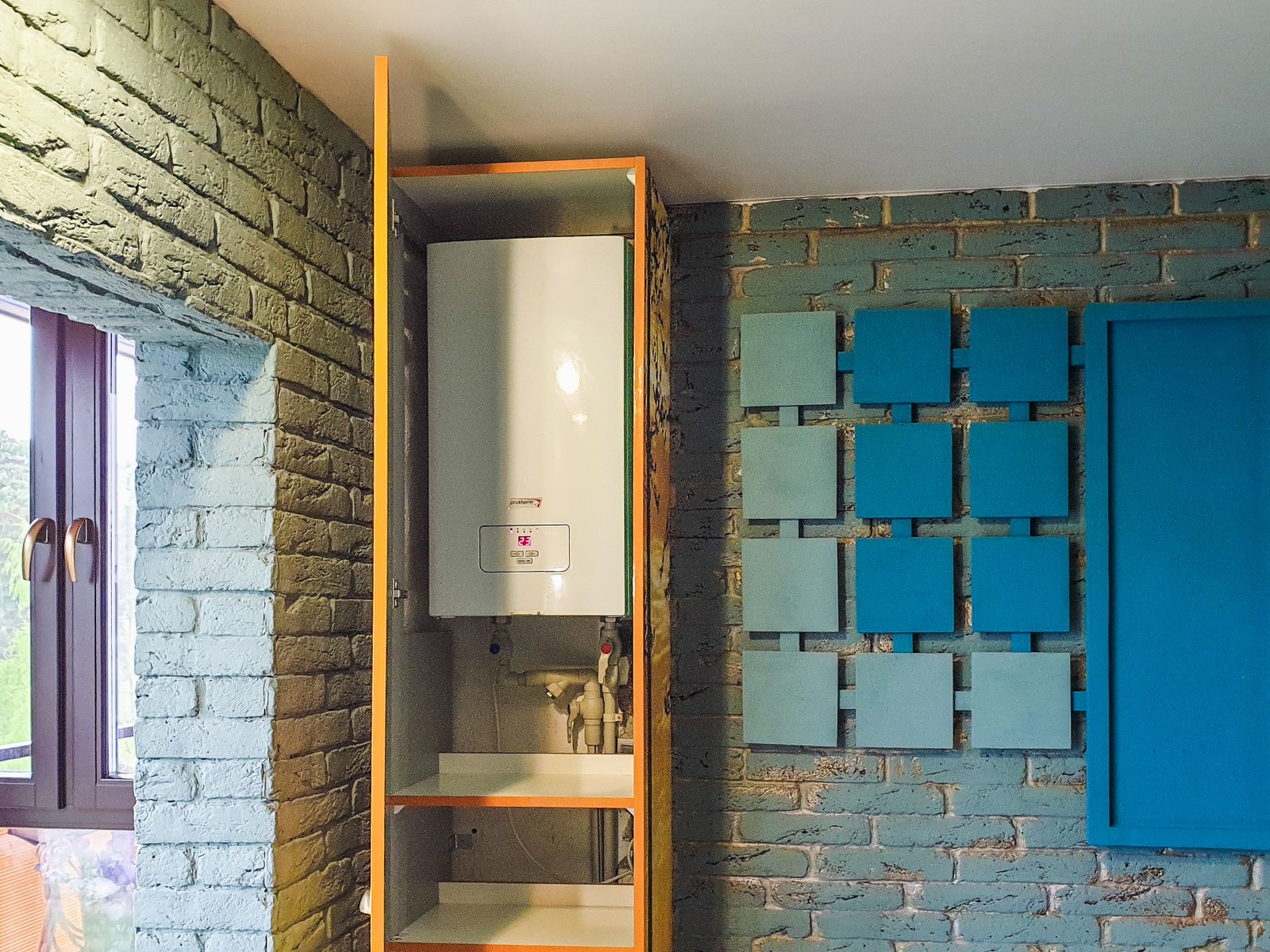
When a water heater dies, most homeowners face the same fork in the road: replace it with another familiar tank, or switch to a tankless unit that heats water only when you turn on a tap. Tankless marketing leans hard on endless hot water and energy savings. Tank fans point to the lower price and the simplicity of a system that has worked for decades. Both sides have a point — and the right answer depends on your home, not on the brochure.
How each one works
A conventional tank heater stores 30 to 80 gallons of water and keeps it hot around the clock, reheating whenever the temperature drops. You pay for that stored heat whether anyone is showering or not — this is standby heat loss. A tankless heater, also called on-demand, has no storage. When a hot tap opens, water flows through a heat exchanger warmed by gas burners or electric elements, and the unit shuts down the moment the tap closes. No stored water means no standby loss, but the unit can only heat water as fast as its burners or elements allow.
Upfront cost: tank wins, clearly
A standard tank water heater typically costs several hundred dollars for the unit itself, and a straightforward like-for-like replacement is usually the cheapest installed job in water heating. A tankless unit typically costs two to four times as much for the equipment alone, and installation often adds more: gas models may need a larger gas line and a new venting system, while electric models may need a panel upgrade to handle the heavy draw. In an older home, those extras can cost as much as the unit. If budget is the deciding factor today, a tank is the honest answer.
Running costs: tankless wins, slowly
Tankless heaters are more efficient because they do not keep a tank hot all day. The U.S. Department of Energy notes that tankless units can be substantially more efficient than storage tanks for homes that use moderate amounts of hot water, with the advantage shrinking for heavy-use households. In practice, many homeowners see noticeably lower water-heating bills, but the savings are measured in tens of dollars a month, not hundreds. At that pace, it can take many years for the energy savings alone to repay the higher purchase and installation cost. Buy tankless for the performance and lifespan, and treat the bill savings as a bonus.
Hot water supply: endless vs ample
This is where the two types genuinely differ in daily life. A tank gives you a fixed reserve: a 50-gallon tank typically delivers enough hot water for two or three back-to-back showers before it needs recovery time, and a large soaking tub can drain it in one fill. A tankless unit never runs out — but it does have a flow-rate limit, measured in gallons per minute. A single unit may struggle if two showers, a dishwasher and a washing machine all run at once, especially in winter when incoming water is colder and needs more heating. Large households often solve this with a higher-capacity unit or, in big homes, two units. Ask any installer to size the unit to your peak simultaneous demand, not your average use.
Lifespan and maintenance
A conventional tank typically lasts around 8 to 12 years; the steel tank eventually corrodes, and when it goes, it can leak a full tank of water onto the floor. A tankless unit typically lasts 20 years or more, with replaceable parts rather than a tank that fails all at once. The catch is maintenance: tankless units need periodic descaling, especially in hard-water areas, because mineral buildup coats the heat exchanger and cuts efficiency. A tank needs less attention — an occasional anode rod check and a flush — but its failure mode is messier. If your current tank is aging, our guide 7 Signs Your Water Heater Is About to Fail helps you spot the end before it arrives.
Florida factors worth knowing
Florida homes bring two specific considerations. First, hard water: much of Florida has moderately hard to hard water, which means scale buildup is a real maintenance item for tankless units — budget for a yearly descaling service, or fit a water softener or scale filter if your installer recommends one. Second, gas availability: many Florida homes are all-electric, and a whole-home electric tankless unit draws a very large electrical load, often requiring a 200-amp service and a panel upgrade. A gas tankless unit avoids that problem but needs proper venting and gas supply. If your home is all-electric with a modest panel, a high-efficiency tank or a heat-pump water heater may be the more practical upgrade.
Which one fits your home?
- Choose a tank if: you want the lowest upfront cost, your household demand is modest, you plan to move within a few years, or your home lacks the gas line or electrical capacity a tankless unit needs.
- Choose tankless if: you plan to stay long enough to enjoy the lifespan, you value endless hot water for back-to-back showers, you are short on space — a tankless unit hangs on a wall — or you want to cut standby energy waste.
- Consider a hybrid: a heat-pump water heater uses far less electricity than a standard electric tank and suits warm climates well, though it needs space and airflow and costs more than a basic tank.
Questions to ask before you decide
- What flow rate do I need at peak use, and which unit delivers it at my winter incoming-water temperature?
- Does my gas line, venting or electrical panel need upgrading, and is that cost in the quote?
- What does descaling or anode-rod service cost, and how often is it needed in my area?
- What warranties cover the heat exchanger or tank, the parts, and the labor — and for how long?
- Is a permit required, and does the quote include it?
The bottom line
There is no universally better water heater — there is a better fit for your home. A tank is cheaper, simpler and perfectly good for many households. A tankless unit costs more upfront, lasts roughly twice as long, and delivers endless hot water within its flow limit. Get the sizing done properly, get the full installed cost in writing including any gas, venting or electrical upgrades, and choose based on how long you will live with the decision. For a local quote, see Reading only gets you so far. Talk to a reviewed local pro, get a written quote, and pay the business directly — this platform never takes advance payments.Need a plumbing pro?