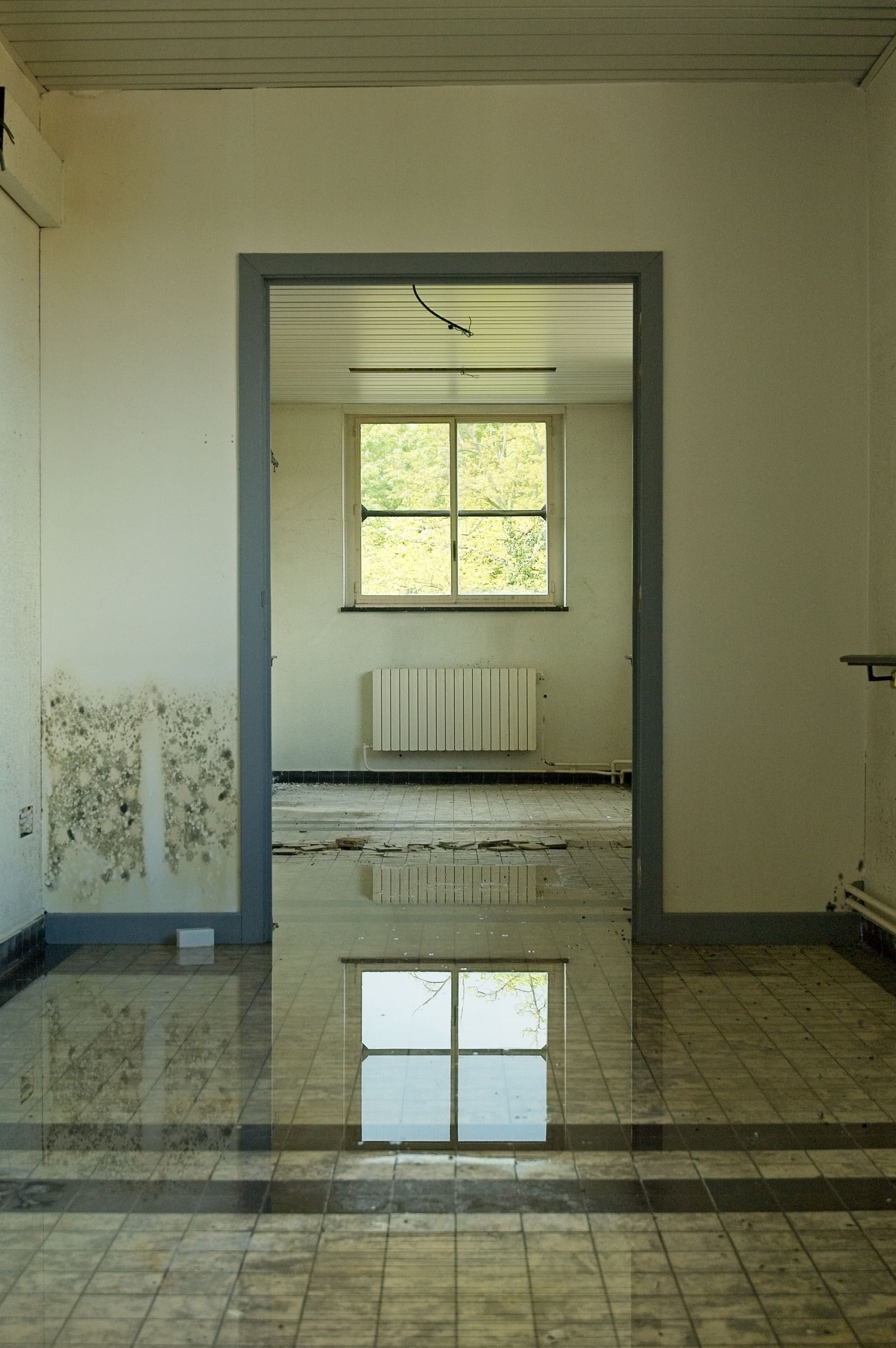
A leak is fixed, the floor is dry to the touch, and a week later a musty smell appears in the corner of the room. It needs moisture, a food source like drywall or wood, and time — and in a Florida home, where indoor humidity already runs high, it can start growing within 24 to 48 hours of water getting where it should not be. The question after any leak is not whether mold might grow, but whether what is growing is something you can handle yourself or something that needs a professional.
Why leaks turn into mold so fast in Florida
Mold spores are everywhere, indoors and out, all the time. They are harmless while dry and inactive. Give them a damp surface — drywall soaked by a slow pipe leak, insulation behind a wall after a roof leak, carpet padding under a failed appliance hose — and they germinate and spread through the material. Florida's climate shortens every timeline: warm air holds more moisture, air conditioning that short-cycles leaves humidity high, and materials that would dry in days in a dry climate can stay damp for weeks here. That is why a leak that looks minor from the outside can hide a large mold problem inside the wall. Our guide 7 Signs of a Hidden Water Leak covers how to spot leaks before they reach this stage.
Fix the water first — always
Cleaning mold without fixing the leak that feeds it is wasted work. Mold returns to any surface that stays damp, no matter how thoroughly it is scrubbed. Before any cleanup, find and stop the water: repair the pipe, seal the roof penetration, replace the failed hose, or fix the appliance. Then dry the area completely, which means more than toweling the surface. Wet drywall, insulation and subflooring can hold water long after the visible surface looks dry. Fans, dehumidifiers, and in some cases removing a section of wet drywall are how professionals make sure the structure is actually dry. A moisture meter — inexpensive to buy, and standard equipment for any remediation pro — tells you whether the wall is dry inside, not just on the surface.
What you can safely handle yourself
Small, surface-level mold on a hard, non-porous surface is a reasonable do-it-yourself job: a patch on tile grout, a spot on a metal fixture, or a small area on a painted wall where the surface is intact and the leak is fixed and dry. The usual guidance is that an affected area under about 10 square feet, on the surface only, with no one in the household having asthma, allergies, or immune problems, can be cleaned by a homeowner wearing gloves, eye protection, and a respirator mask, with the room ventilated and the area kept from spreading spores to the rest of the house. Scrub with detergent and water, dry completely, and watch the spot for a few weeks.
When to call a professional
Several situations move the job firmly into professional territory. First, size and depth: mold covering a large area, mold inside walls, ceilings or ductwork, or mold that returns after cleaning has almost certainly grown into porous materials that surface cleaning cannot reach. Second, the water source: flooding from sewage, a sewer backup, or any contaminated water is not a cleaning job — it is a health hazard that needs professional handling and often disposal of affected porous materials. Third, health: if anyone in the household has asthma, allergies, or a weakened immune system, or if occupants develop persistent coughing, headaches, or worsening symptoms that ease when away from the house, get a professional assessment rather than disturbing the mold yourself. Fourth, uncertainty: a musty smell with no visible mold, staining or bubbling paint on a wall, or a leak that ran undetected for weeks all suggest hidden growth that needs moisture detection equipment to map. Finally, heating and cooling systems: mold in ductwork or on an air handler spreads spores through the whole house every time the system runs, and that system needs a specialist, not a scrub brush.
What a professional actually does
A mold professional starts with inspection and moisture mapping: finding every damp area, including the ones you cannot see, with meters and sometimes thermal imaging. Containment comes next — sealing the work area so spores are not spread through the house during removal. Then the affected porous materials that cannot be cleaned — typically wet drywall, insulation, and carpet padding — are removed and disposed of, while hard surfaces are cleaned and treated. The area is dried to a verified moisture level, and only then is it rebuilt.Be cautious of any company that offers to spray or fog mold away without removing wet materials, or that quotes without inspecting moisture levels. Real remediation is mostly drying and removal. Also be cautious of the reverse pitch: a company that finds mold everywhere and recommends gutting rooms that show no moisture evidence. A second opinion is cheap compared to unnecessary demolition.
Costs, insurance and timing
Professional mold remediation pricing varies widely with the size of the affected area, how much material must be removed, and whether the job involves containment or ductwork. Small contained jobs may run in the hundreds of dollars; larger jobs involving wall removal and rebuilding run into the thousands. Homeowners insurance sometimes covers mold remediation when it results from a covered sudden event, like a burst pipe, but coverage for mold from long-term leaks or poor maintenance is often limited or excluded — check your policy and report a sudden leak promptly, with photos of the damage before cleanup.
Preventing the next one
After the repair, prevention is mostly about moisture habits: fix small leaks the week you notice them, not the season you get around to them; keep indoor humidity below about 60 percent with air conditioning and, if needed, a dehumidifier; run bathroom exhaust fans during and after showers; check under sinks, around toilets, and behind appliances a few times a year; If a pipe bursts or a major leak floods a room, our guide Burst Pipe at 2 AM: The First 5 Steps covers the immediate response. A dry home is a mold-free home, and dryness is a maintenance habit, not a one-time fix.
The bottom line
Small surface mold on a hard surface, with the leak fixed and the area truly dry, is a job you can do yourself with proper protection. Hidden mold, large areas, contaminated water, ductwork, health symptoms, or mold that keeps coming back are professional jobs — and disturbing a large hidden colony without containment can spread the problem through the house. When in doubt, get an assessment: a moisture inspection is a small cost against a problem that only grows while it waits. For help finding and fixing the leak behind the mold, see Reading only gets you so far. Talk to a reviewed local pro, get a written quote, and pay the business directly — this platform never takes advance payments.Need a plumbing pro?