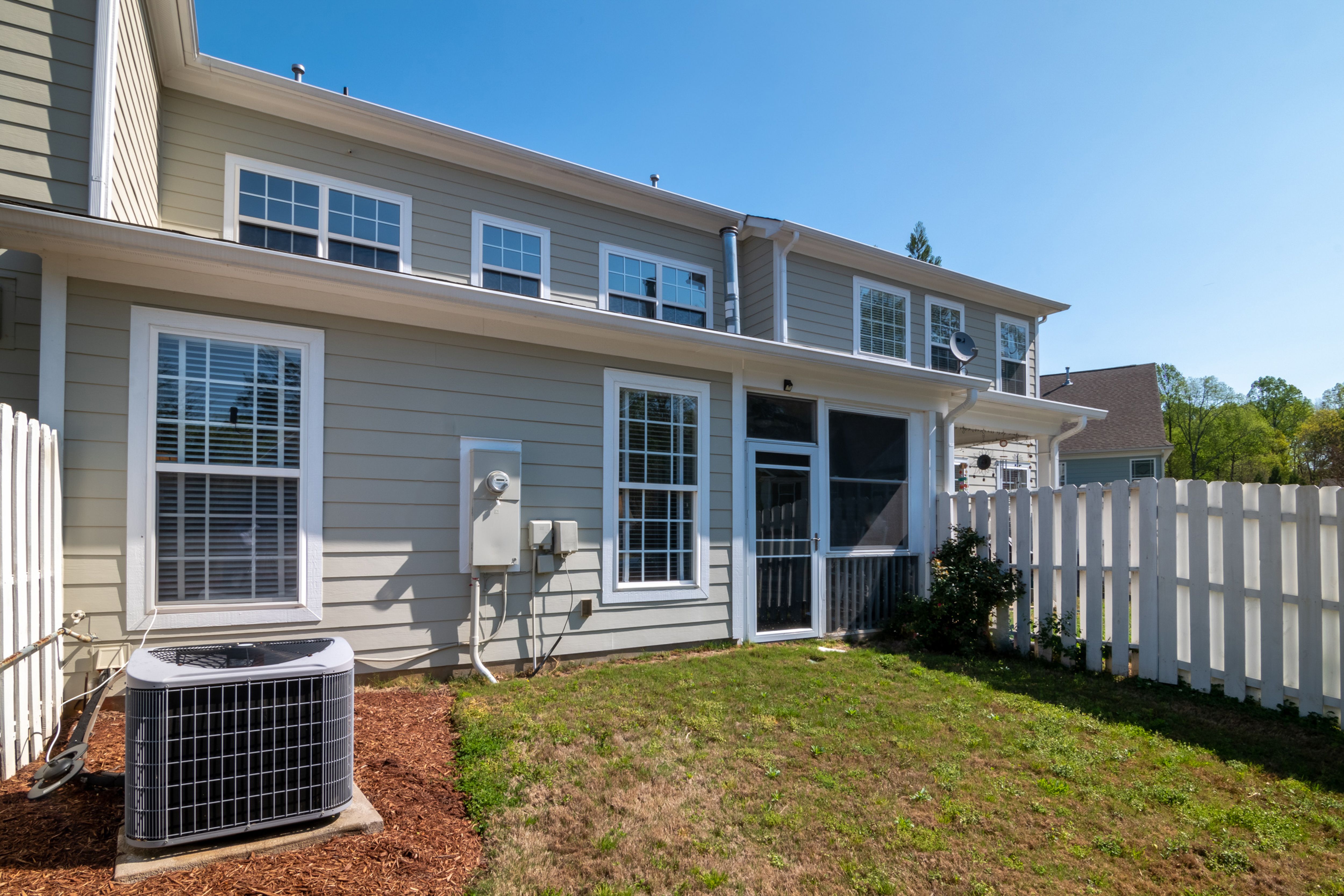
Ask three contractors what size air conditioner your home needs and you may get three different answers — and the difference matters more than the brand on the box. In Florida, where the air conditioner runs most of the year and humidity is half the comfort problem, the right size is not the biggest one you can afford. It is the one that matches your home's actual cooling load: big enough to hold temperature on the hottest afternoon, small enough to run long enough to pull humidity out of the air. Get it wrong in either direction and you pay for it every month, in comfort and in electricity.
Tons, BTUs and what they actually mean
Air conditioner capacity is measured in tons and BTUs. One ton of cooling equals 12,000 BTUs per hour — roughly the cooling power needed to melt a ton of ice in a day, which is where the term comes from. A typical Florida single-family home usually lands somewhere between 2 and 5 tons, but that range is so wide it is almost useless on its own. A well-insulated 1,800-square-foot home with shade may cool comfortably on a smaller unit than a leaky 1,500-square-foot home with a sun-baked west wall. Square footage is the starting point of the conversation, not the answer.
The rule of thumb — and why it misleads
You will hear a common shortcut: about one ton for every 500 to 600 square feet. On that math, a 2,000-square-foot home needs roughly 3.5 to 4 tons. The shortcut survives because it is easy, not because it is accurate. It ignores ceiling height, insulation, window size and direction, air leakage, duct condition, the number of people in the home, and how much shade the roof and walls get. In Florida it also ignores the factor that matters most after temperature: humidity. Two homes of identical size can have cooling loads that differ by a full ton once those factors are counted.
Why bigger is not better
An oversized air conditioner sounds like insurance — extra capacity for the hottest days. In practice it creates a specific Florida problem: short cycling. The unit blasts cold air, satisfies the thermostat quickly, and shuts off before it has run long enough to dehumidify. The result is a home that is cool and clammy at the same time, with humidity that feeds mold, dust mites and that damp smell in closets. Short cycling also wears components faster and raises bills rather than lowering them. An oversized unit costs more to buy, more to run, and delivers worse comfort — the rare purchase where paying more gets you less.
Why smaller is not a bargain either
An undersized unit has the opposite failure. It runs constantly on hot afternoons and still loses ground, leaving rooms warm by evening and the system worn out years early. Constant running does dehumidify well, but comfort still suffers, and the electricity bill reflects a machine that never rests. Undersizing sometimes happens when a homeowner replaces a unit with the same size that was already there — but the old unit may itself have been wrong, or the home may have changed since it was installed, with an addition, new windows, or added insulation. The previous size is a clue, not a specification.
The right way: a load calculation
The professional standard is a Manual J load calculation, a room-by-room worksheet that accounts for square footage, ceiling height, insulation levels, window area and orientation, air infiltration, duct losses, local climate data, and internal heat from people and appliances. It takes real measurements and typically an hour or more of the contractor's time. Any contractor quoting a full system replacement should be willing to do one, or at least to explain their sizing method in detail. Ask for the calculation in writing, and be wary of any quote that sizes the system by square footage alone or by matching the old unit without discussion. If quotes disagree on size by more than half a ton, ask each contractor to walk you through their numbers — the one who can explain theirs usually did the work.
Florida factors that change the number
Several Florida-specific details push the calculation up or down. A home with a dark roof and unshaded west-facing glass gains far more afternoon heat than a shaded home with a light roof. Attic insulation matters enormously: a poorly insulated attic lets Florida's summer heat pour through the ceiling, and no air conditioner can outrun a hot attic efficiently. Ductwork matters too — leaky or poorly insulated ducts in a hot attic can waste a large share of the cooled air before it ever reaches a room, and fixing ducts sometimes lets a home cool well on a smaller unit than expected. If your current system cools some rooms well and others poorly, the problem may be ducts or airflow rather than size at all.
Efficiency ratings and what to expect on price
Once size is settled, efficiency is the next choice. Modern systems carry a SEER2 rating, and higher numbers mean lower running costs for the same cooling. In Florida's long cooling season, a higher-efficiency unit often pays back its premium over its lifetime, but the payback depends on how much you run it and your electricity rates — ask the contractor to show the estimated annual operating cost for each option, not just the purchase price. As for the system itself, a full replacement for a typical home often runs into the thousands of dollars, with the final figure driven by size, efficiency, ductwork changes, and installation complexity. Our guide How Much Does AC Repair Cost in Florida? explains how repair pricing works when replacement is not yet needed.
Signs your current AC is the wrong size
Short cycling and clammy air point to oversizing; a unit that never shuts off on hot days and still cannot hold temperature points to undersizing. Uneven rooms, high humidity even when the air feels cool, and a system that needs frequent repairs can all be sizing symptoms, though ductwork and maintenance can cause similar problems. Before assuming size is the issue, make sure the system is healthy: a dirty filter, low refrigerant, or a failing component can mimic a sizing problem exactly. Our guides Why Is My AC Blowing Warm Air? and HVAC Maintenance Checklist Twice a Year cover the checks to run first.
The bottom line
The right size air conditioner for a Florida home is the one a proper load calculation says it is — not the one a shortcut suggests, and not the one the old unit happened to be. Insist on the calculation, fix the ducts and insulation that distort it, and choose efficiency on lifetime cost rather than sticker price. Done that way, the system runs steadily, the humidity stays down, and the hottest afternoon of the year feels unremarkable — which is exactly what a good air conditioner should feel like. For a local sizing assessment, see Reading only gets you so far. Talk to a reviewed local pro, get a written quote, and pay the business directly — this platform never takes advance payments.Need a hvac pro?